Is it a Cultural Burn or a Prescribed Fire? The Importance of Knowing the Difference
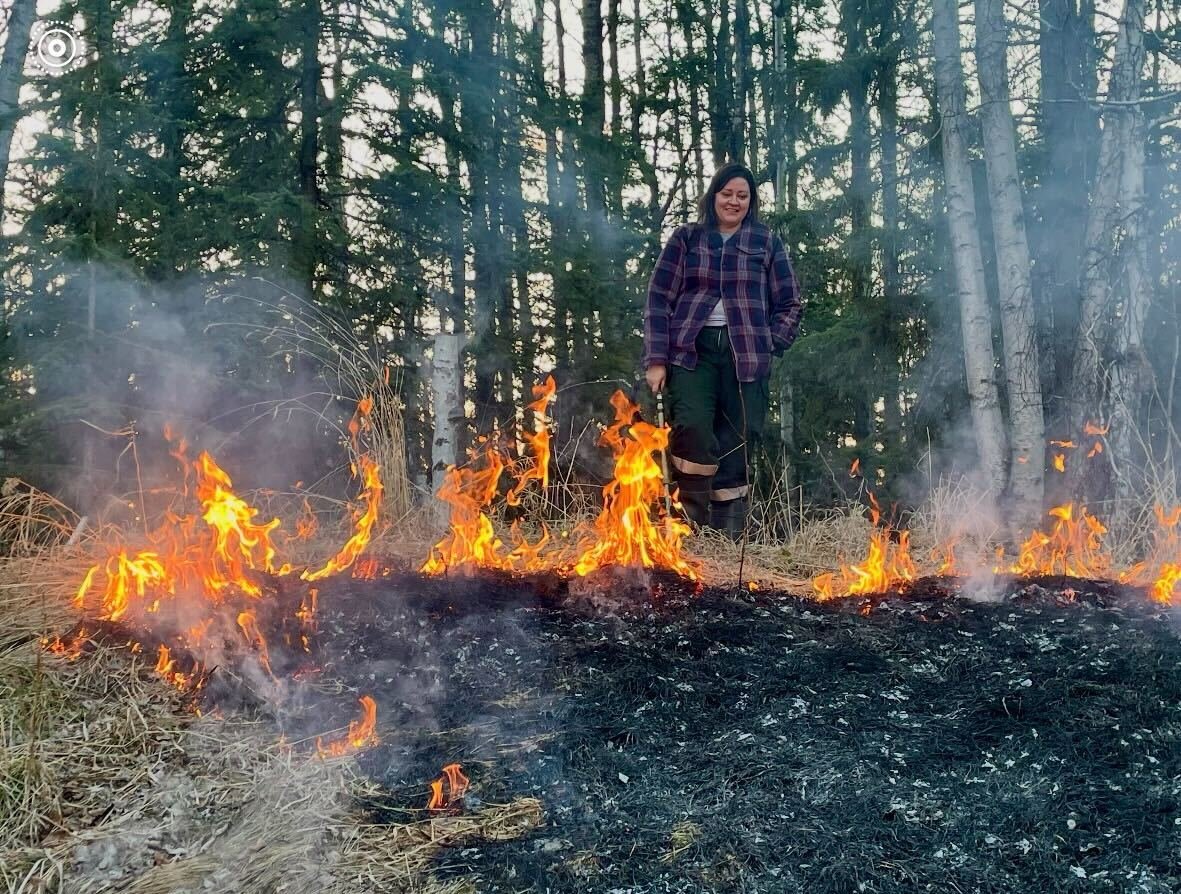
Watching a spring cultural burn in the boreal forest.
By Dr. Amy Cardinal Christianson
May 18, 2026
As cultural fire practices have gained more and more popularity, I’ve noticed that terms like cultural burning and prescribed fire are frequently misused in the media, by government agencies, and academics. In reality, both practices are important but different–like apples and oranges. While it might seem like semantics to some, the terminology matters because words help us shape our understanding. Terms around burning contain an understanding of who has power and authority, and can cause confusion and misunderstanding. The terms we use also can show respect to people’s different experiences and knowledge systems.
Most of my thinking on this matter has been heavily influenced by the important work that Tribes are doing in northern California, including the Karuk Tribe and the Cultural Fire Management Council. The Indigenous Fire Circle at Parks Canada, made up of highly esteemed cultural fire practitioners, has also been influential. I will note I’m also what you might consider a cultural fire purist. I think diluting the term poses a high danger to Indigenous sovereignty and autonomy and could further remove an important practice from the hands of Indigenous Nations, resulting in extensive knowledge appropriation.
So what is the difference?
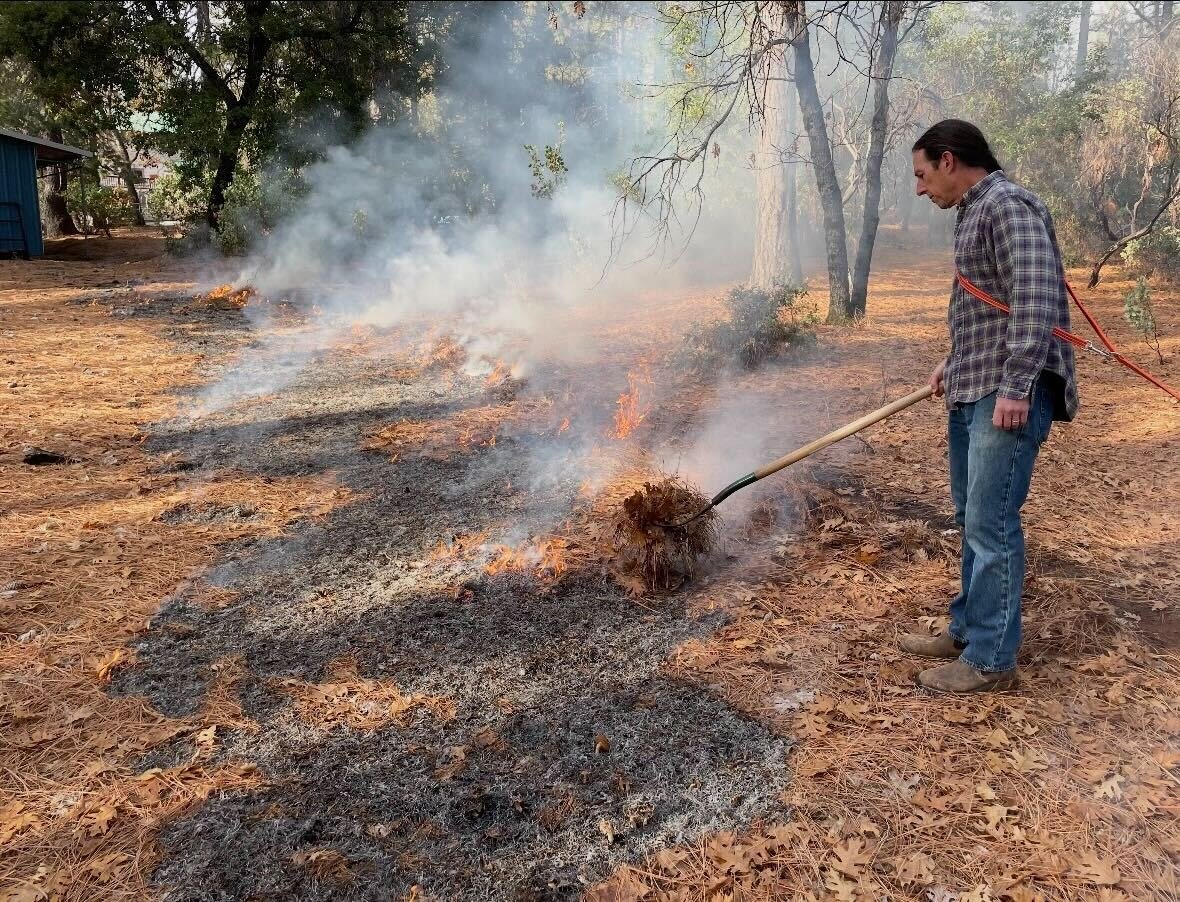
Dr. Don Hankins tending a fire on his property in California,
Cultural Burns
Cultural burns are Indigenous-led cultural practices done to achieve specific cultural objectives, with an overall goal of stewarding the land. The burning produces the creation of mosaics on the landscape, which increases biodiversity and reduces risk of out-of-control wildfires by promoting healthy landscapes. There are also very important spiritual and ceremonial aspects involved in many cultural fire practices. Cultural burns are driven by Indigenous knowledge of the time to burn and techniques for burning.
The burns are generally slow, cool burns, sometimes what we call fires that we can walk beside. However, sometimes it burns need to be done hotter, depending on the type of cultural outcome you are trying to achieve. Generally in cultural burning, you burn a lot of small areas over a longer period of time. The burns are most often conducted in the early spring or late fall–in many areas of Canada–it’s connected to the snow and other important environmental indicators. Spring burns are done as the snow melts and recedes, providing natural fire breaks. Fall burns are done before the first snowfall. Many people who conduct cultural burns do not use personal protective equipment, as they feel the fire is low risk because of the times they burn.
Importantly, cultural burns follow Indigenous governance structures, which include roles for community members and community involvement, all the way from Youth to Elders. The knowledge is passed on through story and practice.
“Cultural burns are about more than fire. They’re about living with the land and producing healthy landscapes our cultures can benefit from.”
Ignition is also done using traditional methods, including pitch sticks, pitch torches, cat tails, grass bunches, etc. This is important, especially when trying to steward land for medicinal plants, as the introduction of fire accelerants (like gasoline and diesel) impacts the plants. However, many Indigenous Peoples have long histories working for firefighting agencies, so prefer to use driptorches. (It would be great if someone came up with an economical natural drip torch fuel not dependent on fossil fuel!)
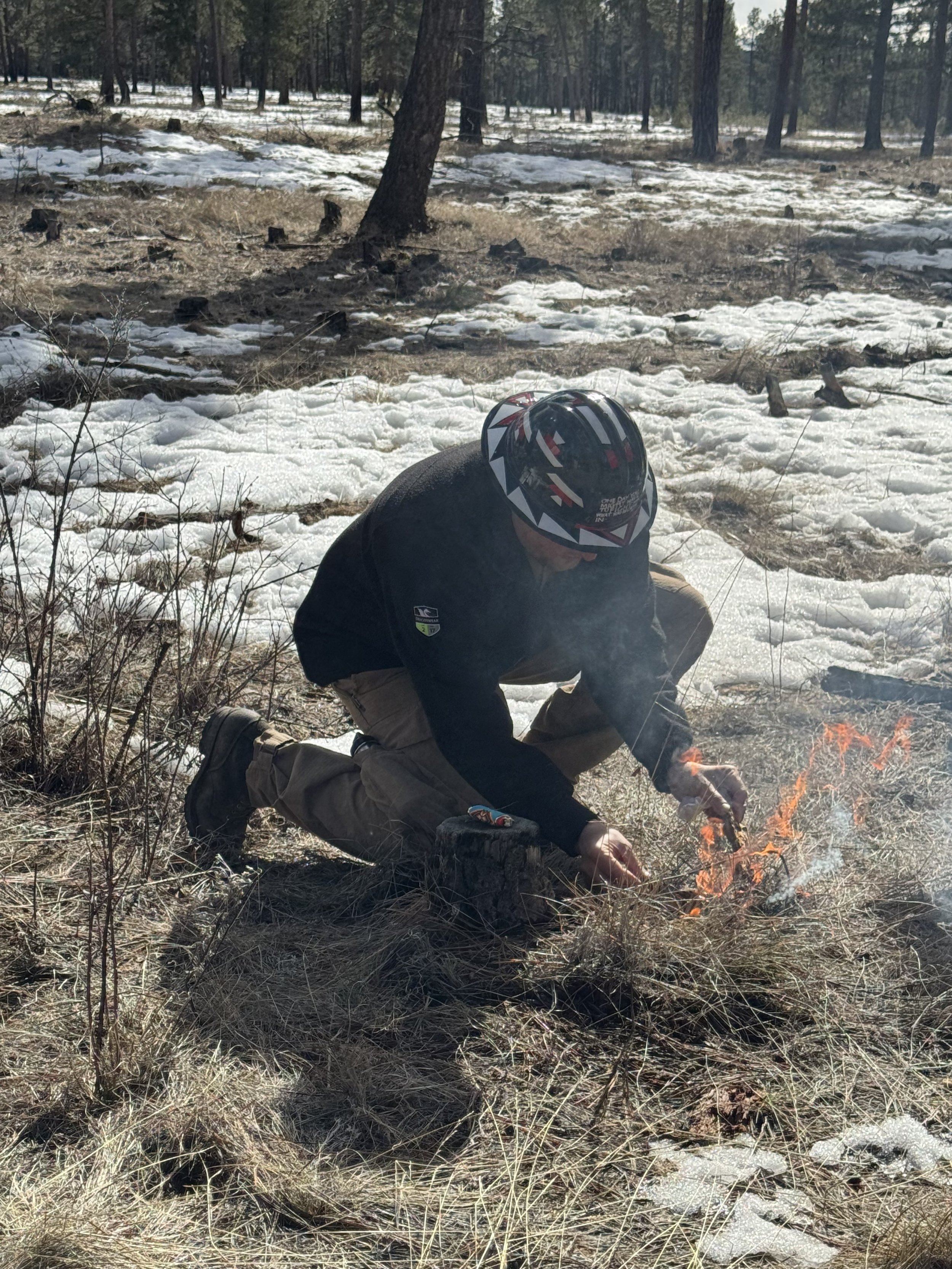
Dr. Frank Lake showing how to start a fire using a pitch stick.
Ultimately, cultural burns are about more than fire. They’re about living with the land and producing healthy landscapes our cultures can benefit from. There’s nothing better than listening to the returning bird songs in the spring while watching a fire move slowly across the landscape, knowing that soon the area will be full of healthy plants we need.
Wildfire Agency Involvement in Cultural Burns
Can a wildfire agency conduct a cultural burn? In my opinion, no. Agencies are colonial institutions–they do not have culture. And they certainly shouldn’t be certifying who is a cultural burner or not. However, wildfire fire agencies have a very important role to play in supporting Indigenous Nations carrying out cultural burns.
Some Indigenous Nations choose to partner with agencies. Many Indigenous peoples involved in cultural burning are also employees of agencies as wildland firefighters, who do prescribed fires in their jobs. The most important part of being an ally is supporting Indigenous leadership. I’ve been on cultural burns where well meaning agency folks come to support a cultural burn, and end up taking it over. This is not allyship.
Prescribed Fires
Prescribed fires play an important but different role on the land. They are generally driven by agencies or organizations, although sometimes they can also be done by farmers, outfitters, or other land user groups. The objectives are not cultural. They are usually aimed at reducing wildfire risk or achieving specific ecological purposes, like improving grizzly bear habitat. Some prescribed fires are also done to promote monocultures, like farmers burning a hayfield.
Fire agencies in Canada have very small prescribed fire budgets compared to the amount they spend on fire response. Prescribed fires often involve production burning, which means burning as much area in as little time as possible. There is often a lot of pressure to do the prescribed burn because of the costs of personnel and equipment. For example, sometimes personnel are brought in from all over the country to fill the roles required to carry out the prescribed burn - if you don’t end up burning, that’s a big expense for doing nothing!
“Prescribed fires often involve production burning, which means burning as much area in as little time as possible.”
Prescribed fires vary in intensity, all the way from low intensity grass fires to high intensity fires that burn large areas of the forest (crown fire replication). To achieve these results, prescribed fires sometimes have to be done in the summer, when it’s hotter and drier - making the fire having a higher risk of escape. Ignition is often done using fuels (gasoline, diesel) and other chemicals to act as accelerants, including Heli torches, drip torches, flaming ping-pong balls, flare guns, etc.
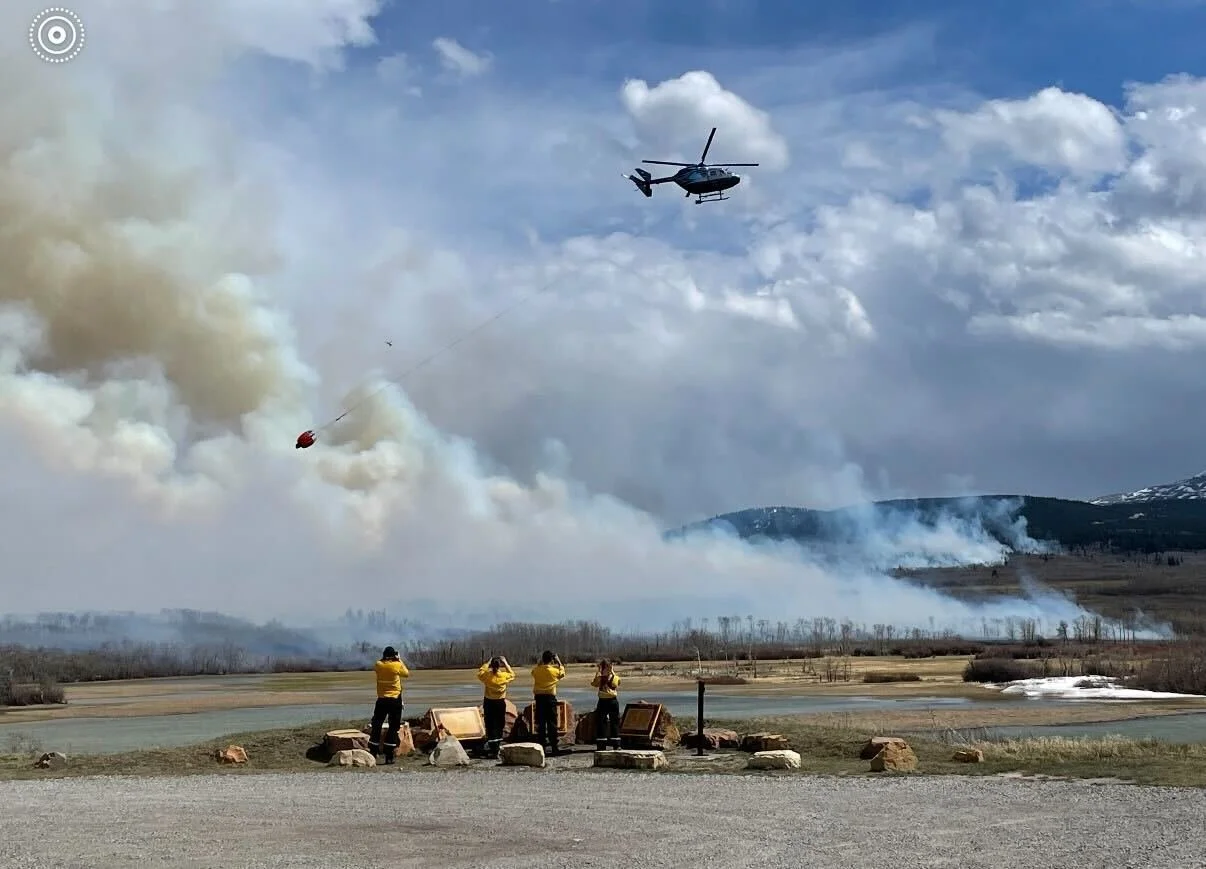
Prescribed burn in Waterton Lakes National Park. Note the large area the fire is burning and the predominant use of helicopters, both for fire ignition and control (water bucketing).
Because most prescribed fires are done in an agency setting, they require a para-military approach, such as following the incident command system, with a top down bureaucratic approach. Most of the folks conducting the prescribed fires are there because of a job that involves working off of the land. Those involved have specific training and certifications required by agencies or organizations, and in Canada are predominantly white men.
Prescribed fires are needed. Elder Joe Gilchrist told me they give the land an important ‘reset’ - removing the impacts of fire exclusion by returning fire. Most forests in Canada are fire dependent, they need fire to be healthy. By excluding fire, many forests have too many trees and too much dry and dead vegetation - this along with climate change is what is fueling the “mega fires” we see now. After a prescribed fire, it also makes it easier for us to go and do cultural burning in an area, because much of the dangerous vegetation has already been removed.
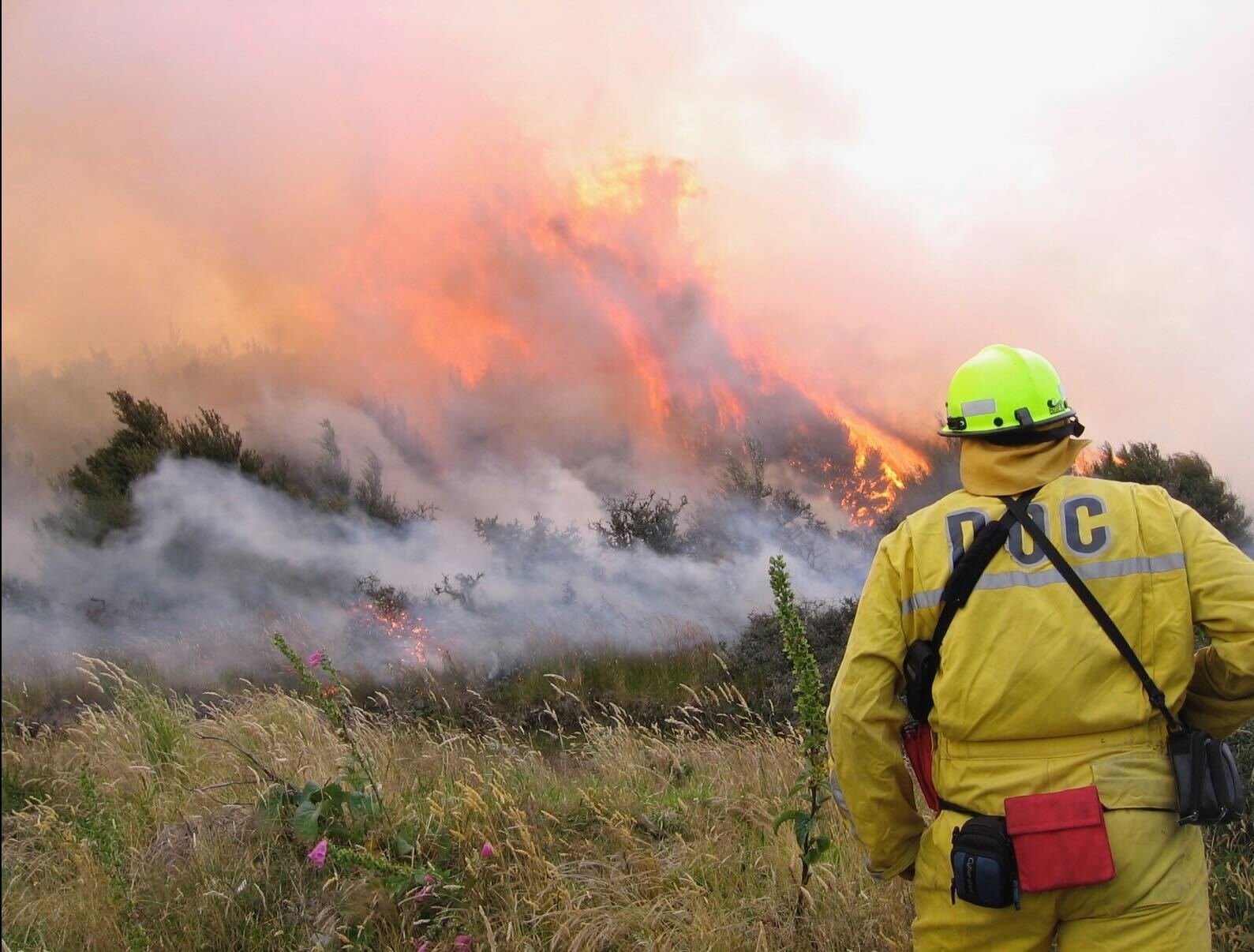
Prescribed fire on the South Island in New Zealand
Prescribed Fire with Cultural Objectives
In many areas, the landscapes are so changed because of fire exclusion that it is difficult to put cultural burns on the ground in a low risk way. Some Nations have begun using the term prescribed fire with cultural objectives to indicate fires that are done using a prescribed fire approach as described above, but are Indigenous-led to achieve cultural objectives. This also can include the cultural objective of being able to conduct future cultural burns in a healthy forest that is less prone to large wildfires, once the fuel accumulation issue has been addressed through prescribed fires. An example of this would be the burning off of slash in a cut block.
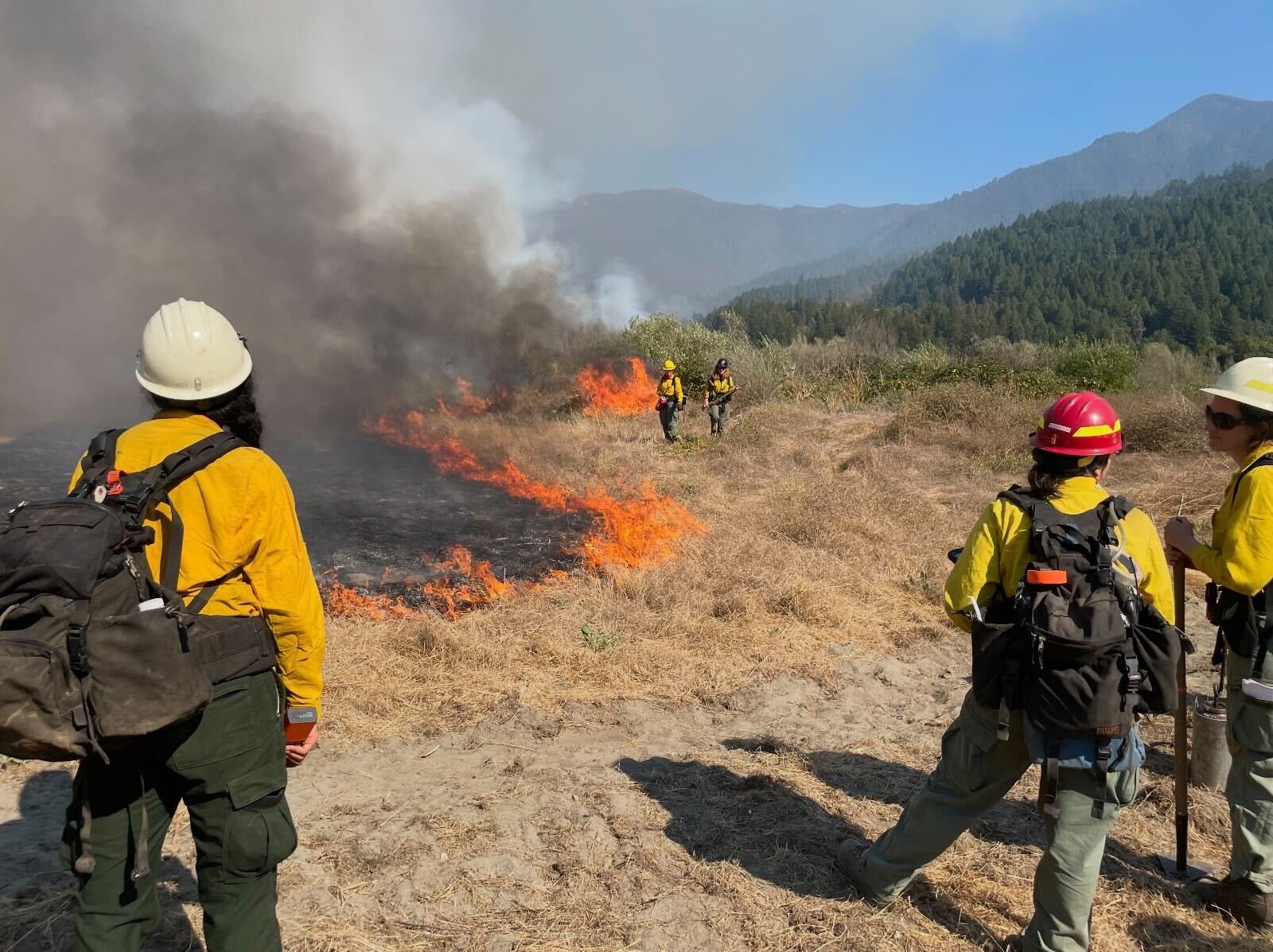
Indigenous women at the Karuk WTREX (Women-in-Fire Prescribed Fire Traininng Exchange) in California conducting a prescribed fire with cultural objectives.
Beneficial Fire
As I said at the beginning, we have landscapes in Canada that need fire. The Wildland Fire Mitigation and Management Commission in the USA released their report in 2023, in which they defined Beneficial Fire as a collective term that includes prescribed fire, cultural burning, and wildfire managed for resource objectives. I think that’s a great term, because it speaks directly to the positive role fire plays. We all need to work together to address the escalating fire crisis, and beneficial fire will help us reduce the risk of out-of control fires to things we value most, like our homes, communities, and watersheds! Indigenous Peoples are well placed to be part of the solution.
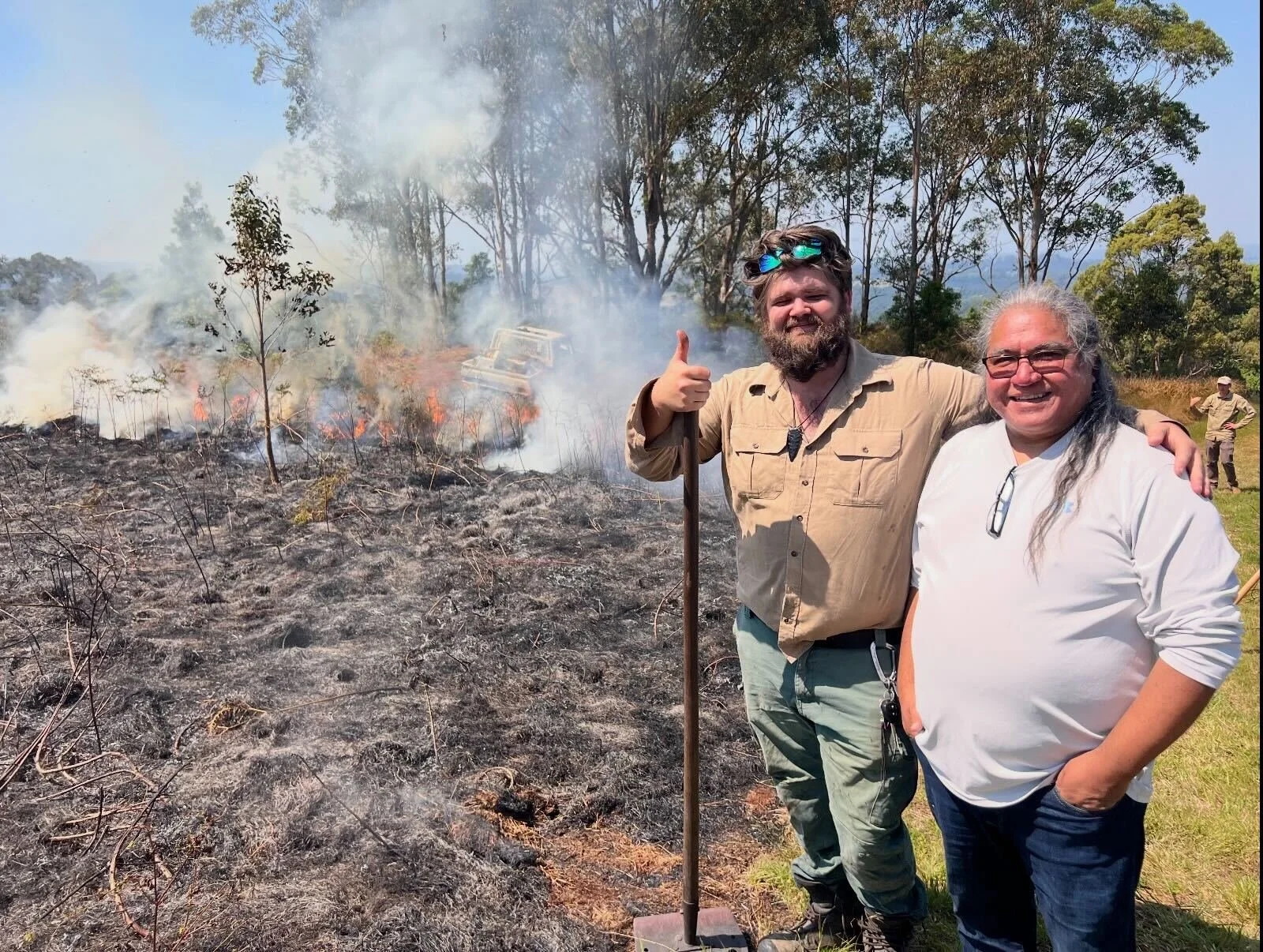
Elder Joe Gilchrist and Tristan Evans tending a cultural fire in Bundjalung Country, Australia