
Indigenous Cultural Fire: Myths & Facts
By Dr. Amy Cardinal Christianson
April 15, 2026
I have the honour of speaking about Indigenous fire stewardship in many settings. I often experience openness and interest, but I also encounter a lot of misconceptions about cultural fire. Here are a few facts to dispel those myths (you can read more here as well).
Myth: Indigenous knowledge about fire has been lost.
Fact: Indigenous fire knowledge remains strong.
I hear comments like this at every fire meeting, gathering, or conference I attend. At a recent workshop, six different non-Indigenous speakers said Indigenous Peoples had “lost” fire knowledge. Language matters here: Indigenous knowledge wasn’t so much lost as ripped out of our hands through targeted racist policies and legislation.
Yet because the knowledge base was so vast, and because Indigenous Peoples still live on and steward their lands, fire knowledge remains high in many communities. Many Nations lead active cultural fire initiatives that restore and sustain lands, fromWe Are Fire in the Saskatchewan River Delta to theSalish Fire Keepers in the interior of British Columbia. Supporting knowledge exchanges and capacity building will ensure more Indigenous Nations and more Canadians benefit from good fire.
Myth: Indigenous knowledge about fire is not applicable today.
Fact: Indigenous fire stewardship helps navigate climate change and restore forest health.
Indigenous knowledge is not static. We observe and adapt—including in the age of climate change. We witness the shifts in wildfire patterns and forestry management practices. And we adjust traditional practices to match current conditions. In northern Alberta, for instance, Elders say: “We can’t burn on the land yet. There’s too much fuel. First, we need to do hand or mechanical thinning, then we can put good fire down and continue intervals of burning.”
Indigenous fire knowledge holders have always known cultural burning reduces the risk of out-of-control wildfires, by removing vegetation and promoting healthy, biodiverse, mosaic landscapes. Academic research also shows that cultural burning reduces the risk of high intensity wildfire in many different landscapes. Recognizing that fire knowledge resides within Indigenous Nations will renew the health of forests across the country.
Myth: If an Indigenous Nation can’t remember using fire, they can’t use it now.
Fact: Indigenous Nations have an inherent right to burn on their territories, even if it’s a new practice.
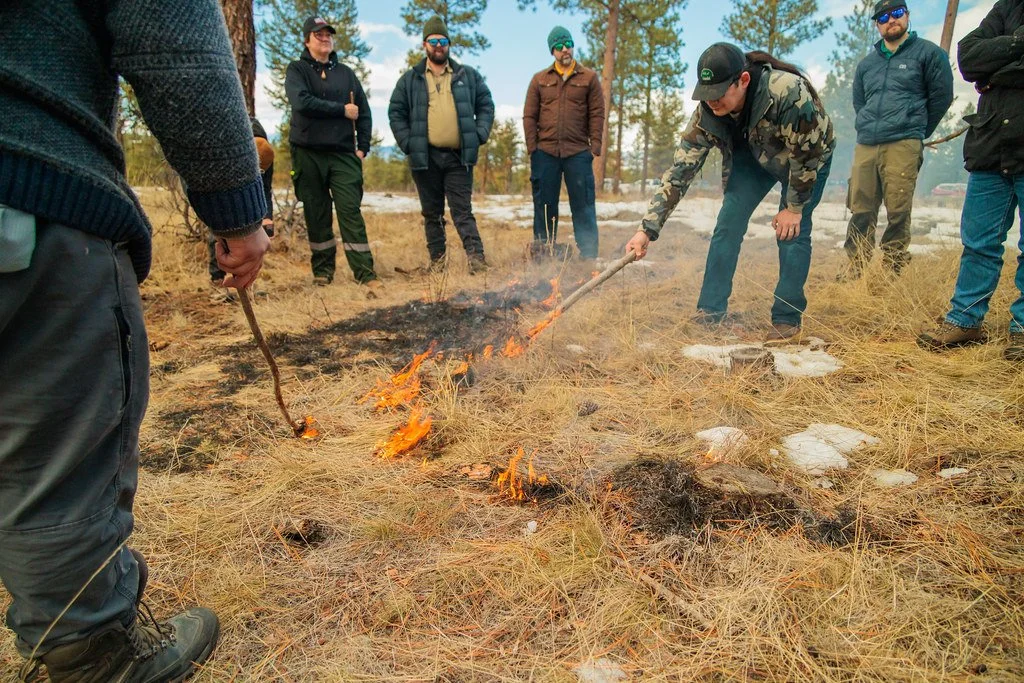
Indigenous Nations have diverse relationships with fire. Some have traditions of burning, but are not actively burning now. Some did not carry out burning or have no ancestral memory of it. Our knowledge continues to adapt as conditions change as a result of forest management, climate impacts, development patterns, and more.
If Nations decide fire would be beneficial to achieving cultural objectives on the land, they have the inherent right to create a new cultural practice around fire and conduct cultural burning. Nations interested in building a cultural fire pathway can work with other Nations that have more experience. This is why cross-cultural exchanges are so important.
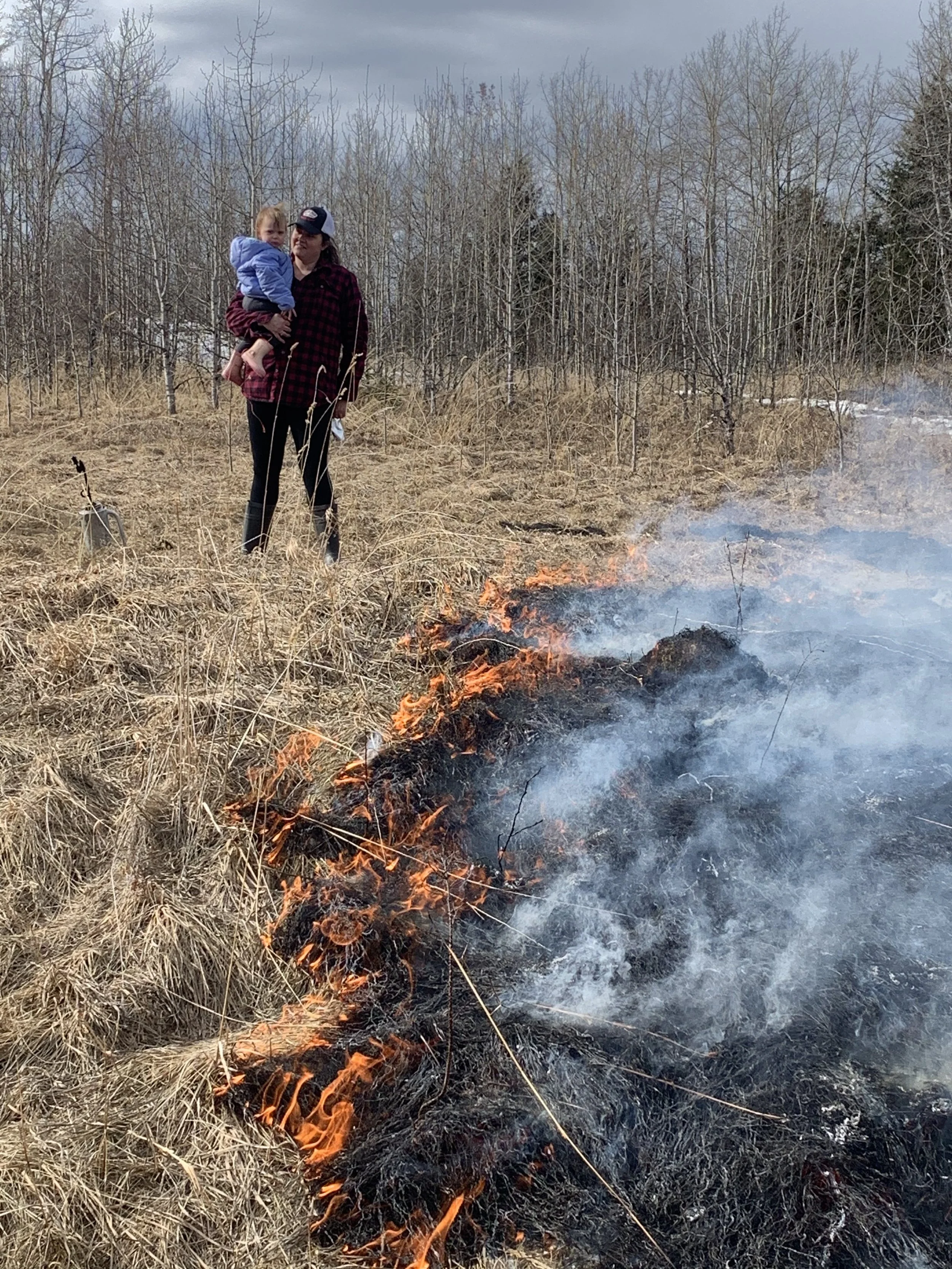
Myth: Indigenous fire knowledge needs to be proven by western science.
Fact: Indigenous knowledge is a form of evidence-based science.
Indigenous knowledge is based on long-term observational study of the land, animals, weather patterns, and human interaction. The land is a good teacher, and we listen. Indigenous Peoples witnessed fire on the landscape, and we learned how to use fire to our advantage. We watched, put fire down, tested, learned, and repeated—not dissimilar from western scientists. Our communities even have our equivalent of validating knowledge through peer review: Elders will call you out!
Government agencies often don’t believe our Elders until a western science study has the same findings–duplicating our knowledge often at a very high financial cost. For example, multiple tree ring studies have confirmed that historically, forests across Canada had shorter burn intervals with more low intensity fire–something our Elders and knowledge holders have been saying for decades–showing the importance of cultural fire practices. Respecting this knowledge will strengthen everyone’s understanding of landscapes and fire.
Myth: Indigenous Peoples only burned small, localized areas around communities.
Fact: Cultural fire has been used throughout traditional territories.
Indigenous Peoples burned close to our communities historically, but we also burned along animal migration routes, seasonal gathering places, and other areas far from our settlements. The circle for cultural fire was wide. These far-ranging burning practices were complemented by lightning, and when you pair cultural burning and natural fire, you create healthier forests on a landscape level.
A recent study by the Karuk Tribe found that most cultural fires were started in places where people were, while lightning fires happened in more remote areas that were less frequently used. Together, these created a wide and varied fire pattern across Karuk territory. Cultural fire certainly helps make communities more resilient, but recognizing its broad application will contribute to larger forest restoration.
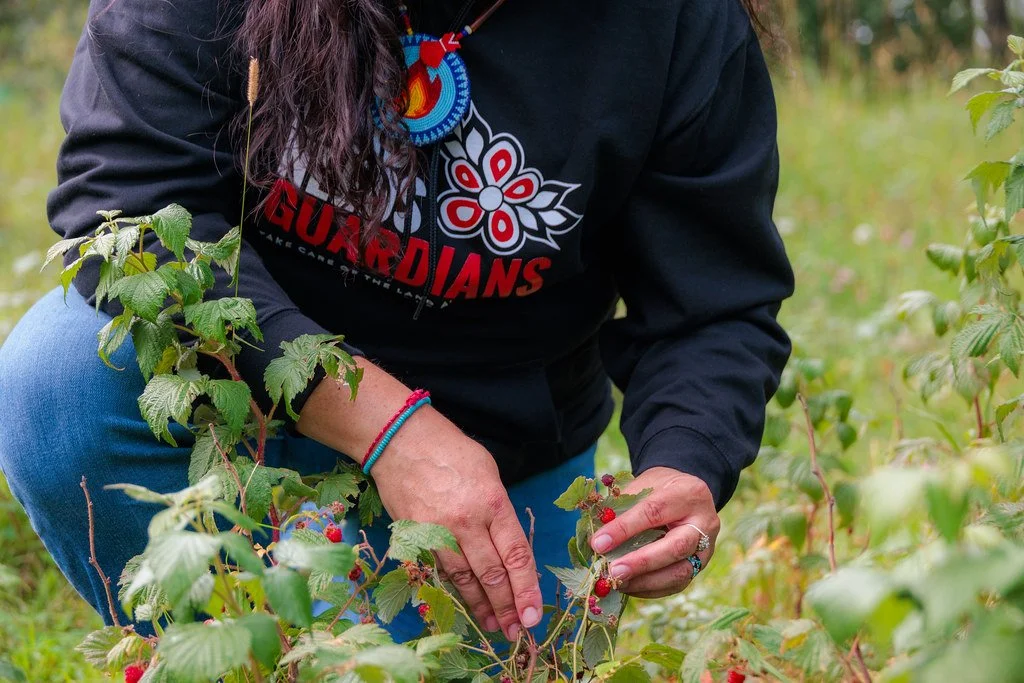
Myth: When agencies do prescribed burns, it’s basically the same as cultural fire.
Fact: Cultural fire and prescribed burns are like apples and oranges, and they are both useful.
Cultural fire is rooted in Indigenous governance, family lineages, and knowledge of territories. You can’t take culture out of cultural fire and expect the same results. That’s why Crown wildfire agencies can’t replace Indigenous knowledge holders, but they can work together. We have a great episode of the Good Fire podcast on this.
Both approaches are beneficial. Cultural fire focuses on localized knowledge, while agencies are centralized entities based on colonial structures. Cultural fire is linked to community governance, while agencies have a paramilitary approach with strict hierarchies. Indigenous burning teaches us to put fire on the land when and where specific cultural objectives can be achieved, while prescribed burning often focuses on doing as much burning in as little time as possible, including stand-replacing wildfires. Respecting the role of cultural and prescribed fire will maximize the benefits for us all.
Myth: Indigenous Nations are trying to replace Crown wildfire agencies.
Fact: Indigenous Nations want to partner with agencies.
Nations want to increase Indigenous-led decision making on fire in our territories. Many Nations also want to partner with the wildfire agencies that help protect our communities in high-risk fire scenarios. We can contribute expertise to the broader effort to keep all Canadians safe—whether it’s working within an agency structure or demonstrating how cultural burns reduce the risk of high-intensity fires. Indigenous peoples also bring important cultural knowledge to fire response efforts, knowing where sites of high cultural importance are and what should be prioritized for protection.
Respecting Indigenous-led decision making, generating opportunities for Indigenous firefighters to rise within agency ranks, and investing in Indigenous Fire Guardians who work for their Nations will create conditions for strong partnerships.