A Year of Growth with First Nations Women Transforming Conservation Fellows
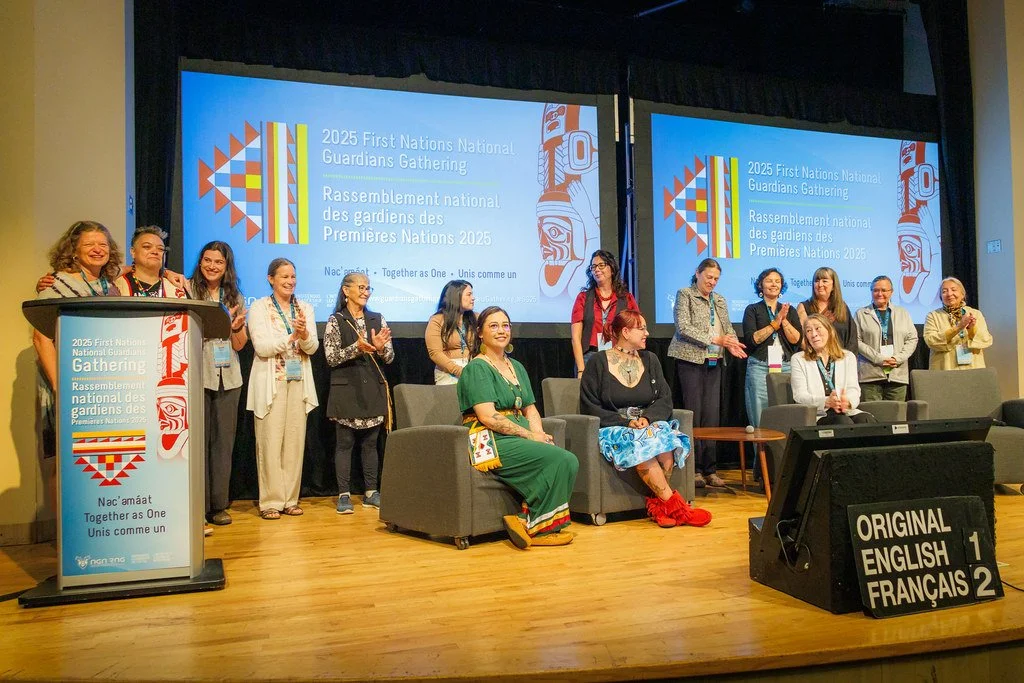
Fellows Mary-Jo Michell and Taylor Galvin surrounded by the Aunties Circle at the First Nations National Guardians Gathering, Victoria, BC.
June 22, 2026
Soon after the first two First Nations Women Transforming Conservation Fellows were announced in June 2025, they spent a day with the Aunties Circle assembled to help mentor them. The Aunties welcomed Taylor Galvin and Mary-Jo Michell to the fellowship and presented them each with a bundle holding medicines, books, and other gifts. The bundles were held in a traditional Innu bag, offered by ILI Executive Director Valérie Courtois. “The Innu are nomadic people,” she said. “And we will be on a nomadic journey together in this fellowship. We want you to carry what you need with you and add to the bundle as you go.”
A year later, those bundles are full.
At the graduation ceremony on May 26, 2026, the fellows described some of what they gathered along the way. “This has been life changing for me,” said Michell. “I gained so much knowledge throughout the year, and I continue to share it.”
“This fellowship has made me believe I belong in these spaces,” said Galvin. “I had imposter syndrome for so long. Now I know we are the future. We will be the face of change, whether it’s in conservation or protection or Guardianship. And maybe someday Mary-Jo and I will become Aunties for this fellowship!”
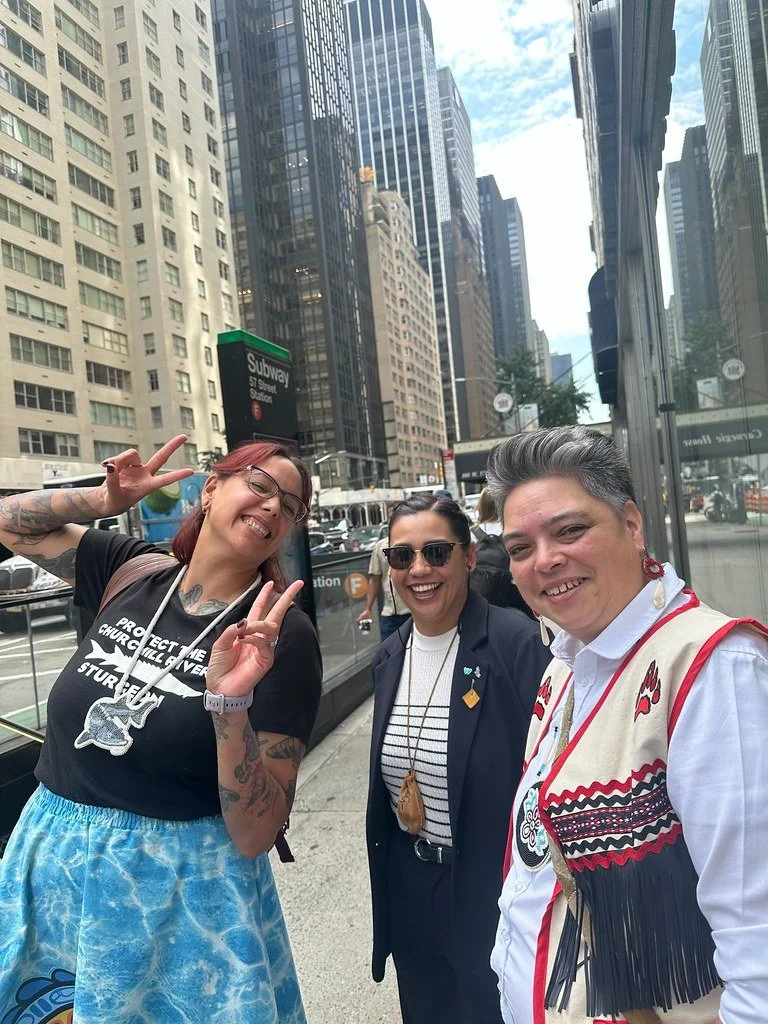
Fellows Taylor Galvin, Mary-Jo Michell, and ILI Executive Director Valérie Courtois about to drop into the New York City Subway during Climate Week 2025.
A New Opportunity
The First Nations Women Transforming Conservation Fellowship was launched by the Indigenous Leadership Initiative (ILI) and Wildlife Conservation Society Canada (WCS) in 2025. Our organizations came together to help emerging women leaders expand their professional skills, build relationships, and learn from mentors.
We also wanted to honour our friend and colleague, Dr. Cheryl-Lesley Chetkiewicz, WCS Canada’s Director of Indigenous Communities and Conservation, who dreamed of creating more opportunities to support Indigenous women in conservation.
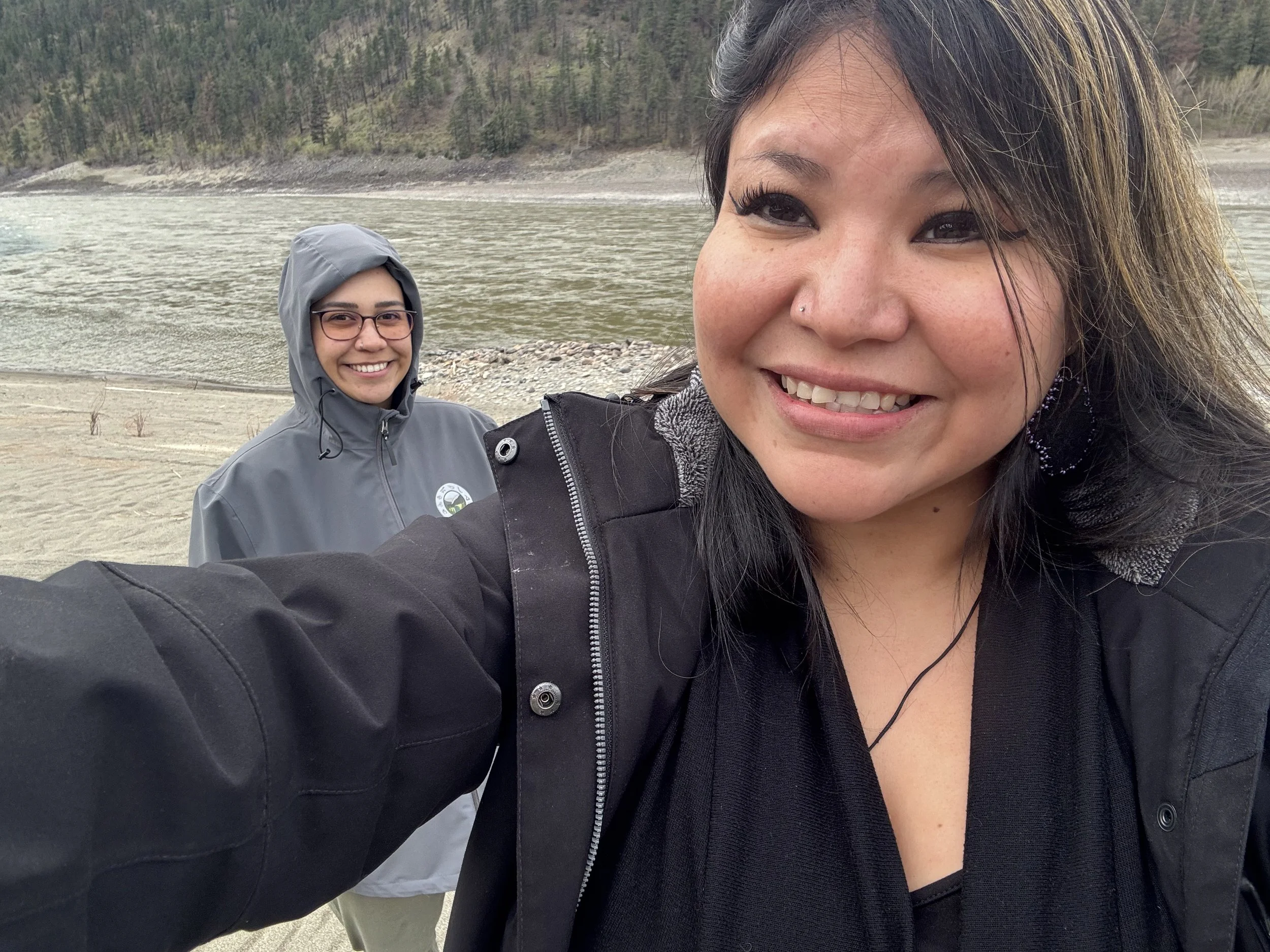
Fellow Mary-Jo Michell welcomes Guardian Angela Bernarde with the Tulita Indigenous Protected and Conserved Area to her territory ƛ̓əq̓ƛ̓aqtn (Kanaka Bar) for a video storytelling exchange.
“Co-hosting this fellowship has been a great experience for the Indigenous Leadership Initiative,” said Courtois. “It has helped us grow and learn across generations. It has expanded our networks. And it has strengthened our commitment to caring for each other and ourselves. It aligns deeply with our values as an organization, and I am proud we could be a part of it.”
Learning By Doing
The fellowship offers skill building in Indigenous-led conservation, western science, cross-cultural leadership and research, strategic communications and policy advocacy, and wellbeing, identity, and leadership sustainability.
A lot of the growth happens on the ground.
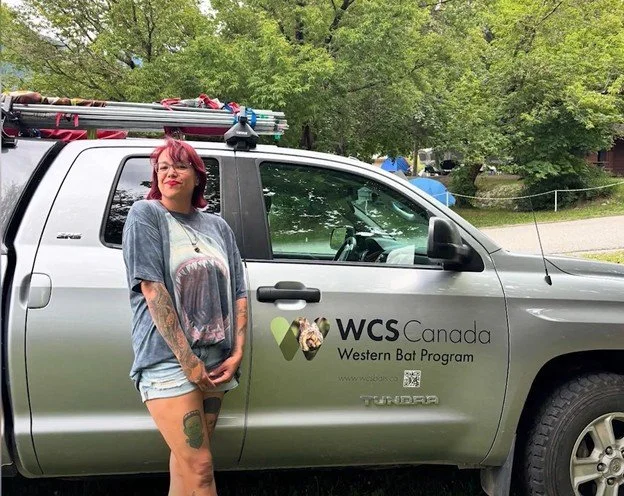
Fellow Taylor Galvin joins WCS Canada scientists to conduct fieldwork outside Nelson, BC.
For the inaugural fellows, that included but wasn’t limited to:
Traveling to Yellowknife to learn about Our Land for the Future, a partnership providing $375 million in support of Indigenous-led conservation, stewardship, and economic development.
Participating in the National Indigenous Fire Gathering, where knowledge holders talked about cultural burning, wildfire response, forest restoration and other topics.
Attending a land summit within the proposed Seal River Watershed Indigenous Protected Area–50,000 sq km in northern Manitoba.
Joining WCS Canada’s Western Bats team for fieldwork in a remote camp among towering cedar trees outside of Nelson, BC.
Galvin said she especially appreciated being a part of the WCS fieldwork team. “It reminded me that conservation is not just a science. It’s a practice of showing up, of learning from each other, and of remembering that how we do the work matters just as much as the work itself.”
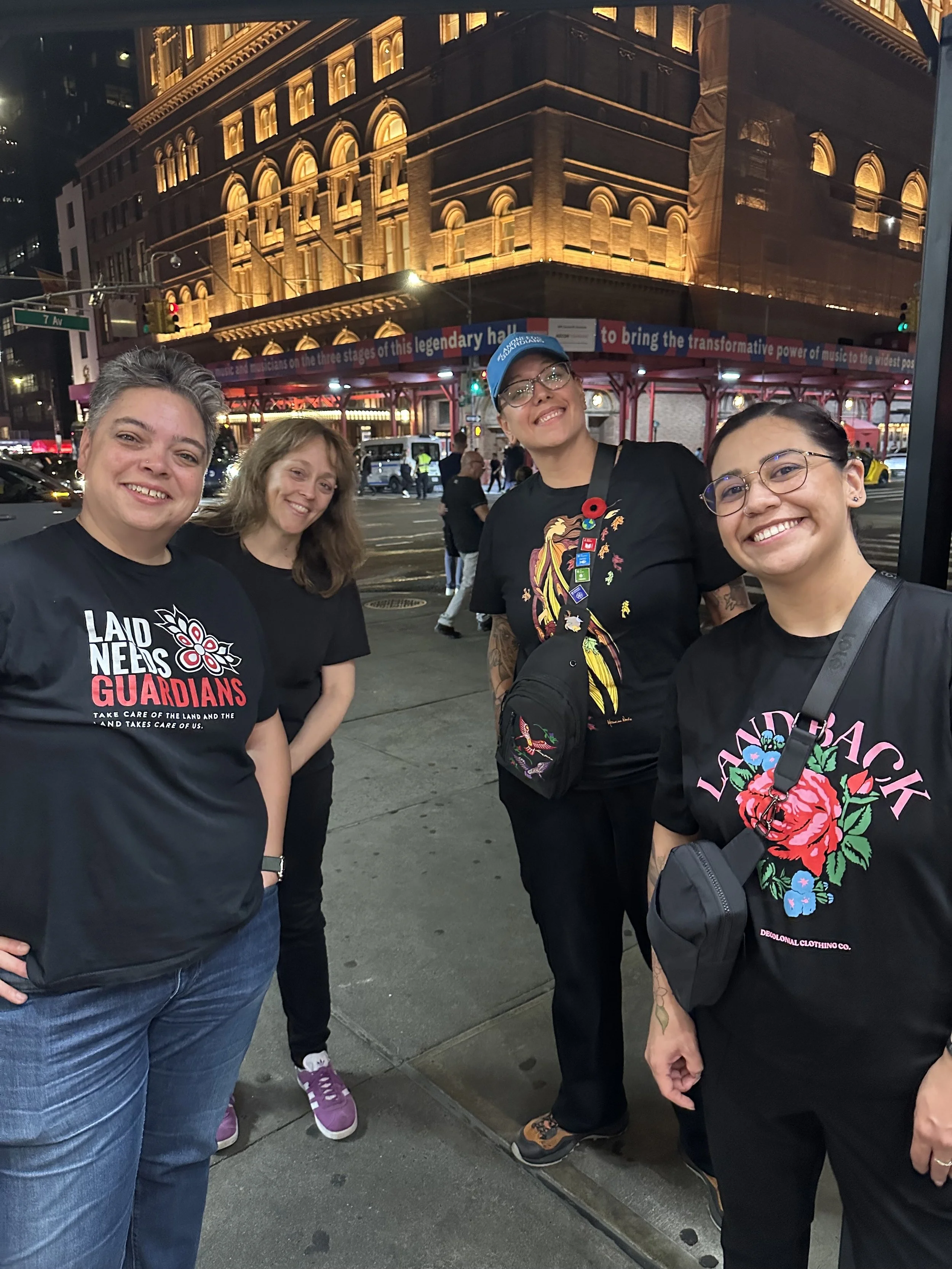
Relaxing after a day of panels and presentations at Climate Week 2025 in New York City.
Both fellows flew to New York City to attend Climate Week 2025, an international summit held alongside the United Nations General Assembly. They attended panels, met decision makers from around the world, and engaged in efforts to centre Indigenous voices in climate response.
They were busy from morning until night and learned how to navigate the intensity. “I got to see Val and Justina in action as leaders, as presenters, and in rest mode. I saw the importance of having a good team around you. I saw how everyone was able to pivot. One of my goals for the fellowship was to become more flexible, and I got to watch both organizations move with the waves as they come in and out.”
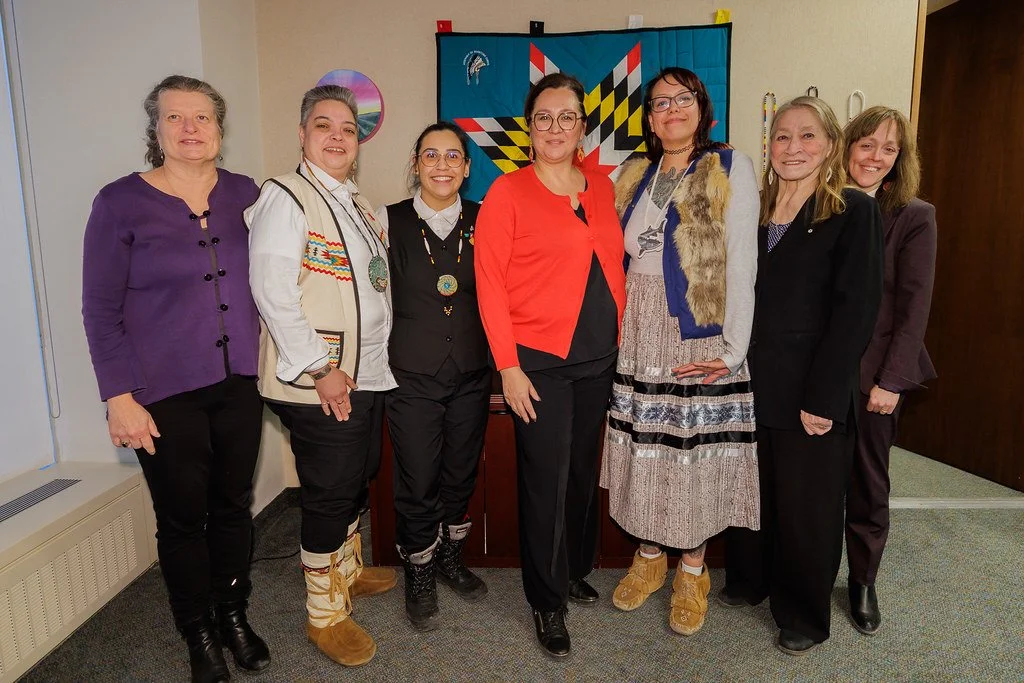
Justina Ray of WCS Canada, Valérie Courtois of ILI, Fellow Mary-Jo Michell, Minister of Indigenous Services Mandy Gull-Masty, Fellow Taylor Galvin, the Honourable Ethel Blondin Andrew, P.C., O.C., and Cathy Wilkinson of ILI.
A Memorable Week in Ottawa
Both fellows also spent a week in Ottawa, meeting with Secretaries of State, Ministers, Senators, and Indigenous leaders. “The trip to Ottawa was something I knew needed to be part of the fellowship from the start,” said Courtois. “I was determined that our fellows would get a glimpse into how Canada as a country makes decisions and how indigenous Peoples are able to influence and operate and participate to the system, here in Ottawa.”
The fellows visited the Senate and were surprised to see the Speaker of the Senate rise and officially recognize them in the gallery of the Senate Chamber. “Hearing our names read in the Senate is something I never imagined would happen. It was quite emotional, thinking about where we started and where we are today,” said Galvin.
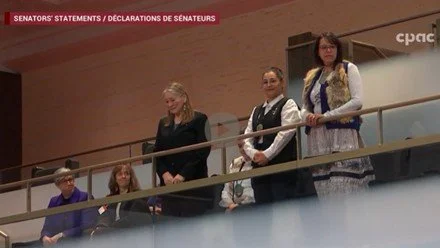
The Honourable Ethel Blondin Andrew, P.C., O.C., and fellows Mary-Jo Michell and Taylor Galvin stand in the Gallery of the Senate Chamber as they are officially recognized by the Senate.
Michell was inspired to share her Ottawa experiences with young people in her community. “I want our youth to know that no matter where you are from, you belong in these spaces too. It isn’t easy, and it won’t always be comfortable, but you just need to keep going. Our voices matter.”
Supported by the Aunties Circle
During these experiences and throughout the year, the fellows were often guided by the Aunties Circle. The Aunties met regularly as a group and individually with the fellows, offering insight, talking through challenges, and sharing experiences in leadership and caring for lands and waters.
This focused support is at the core of the fellowship. “Mentoring is not about training. It's fundamentally about one-on-one relationships,” said Justina Ray, President & Senior Scientist with WCS Canada. “It is an ongoing conversation, and it’s iterative. Over time, both parties grow—I grow as much as anybody I mentor.”
The Aunties’ love and admiration were on full display at the graduation ceremony in May, where they celebrated the fellows. Tears of gratitude were shed, and lots of laughs were shared, including about the lip pointing grease everyone had been given. Just the kind of thing Aunties—and future Aunties—need.
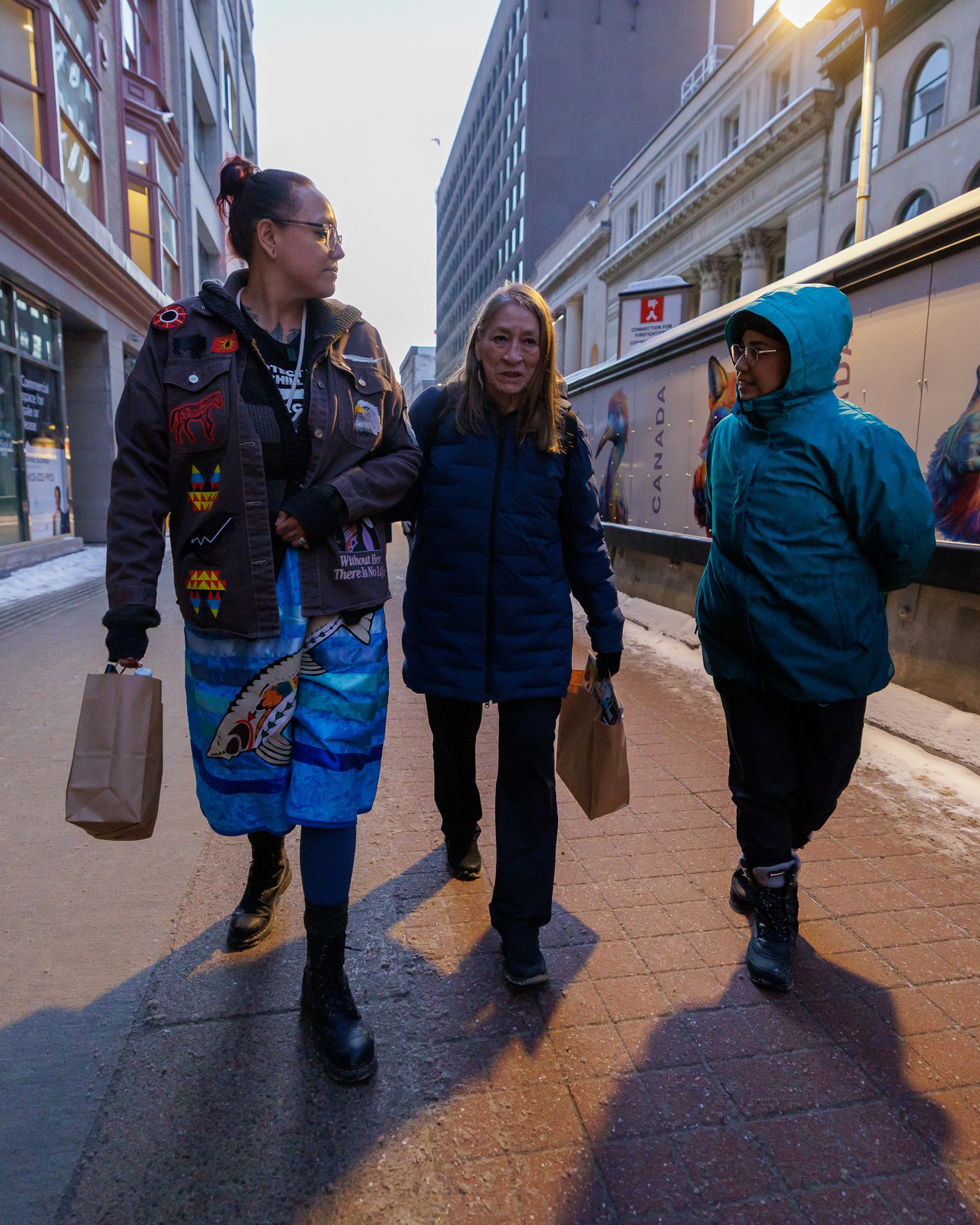
Fellows Taylor Galvin and Mary-Jo Michell walk with a member of the Aunties Circle, the Honourable Ethel Blondin Andrew, P.C., O.C.
Linda McDonald, a Kaska Elder from the Liard First Nation, spoke for many when she said, “It’s so heartwarming to see how you two have grown. You give us Elders hope. We know you two [are] carrying on your knowledge. Your circle is going to get bigger, and you will pass on your knowledge to young people.”
“Whether you are talking about land, animals, people, it’s all about relationships and how you conduct yourselves. We have relationships with each other now. We can continue to help each other. That’s really one of the things that warms my heart.”
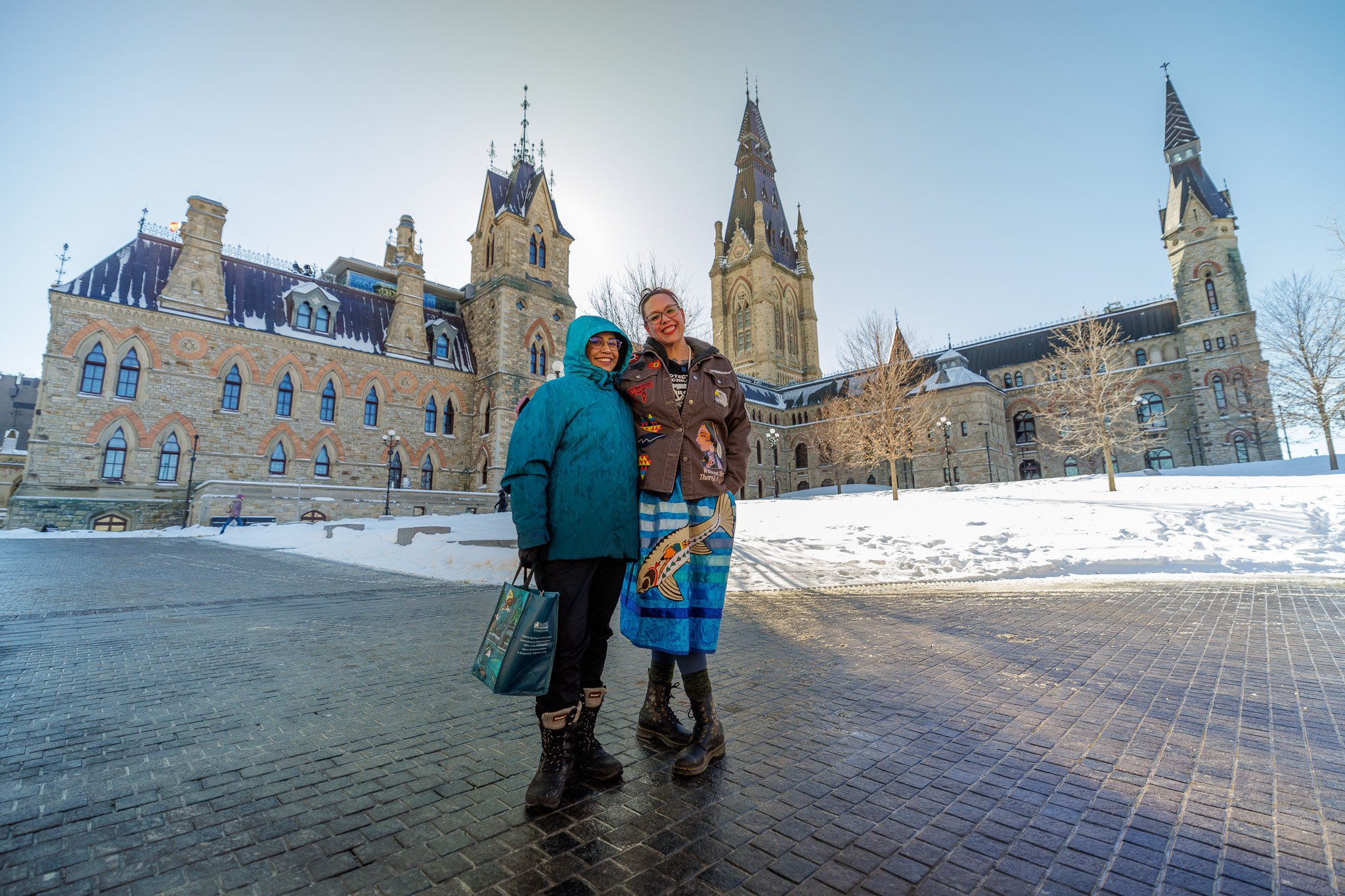
Fellows Mary-Jo Michell and Taylor Galvin on Parliament Hill.