

New Poll: Canadians Resoundingly Support Indigenous-Led Solutions to Wildfire
September 23, 2026
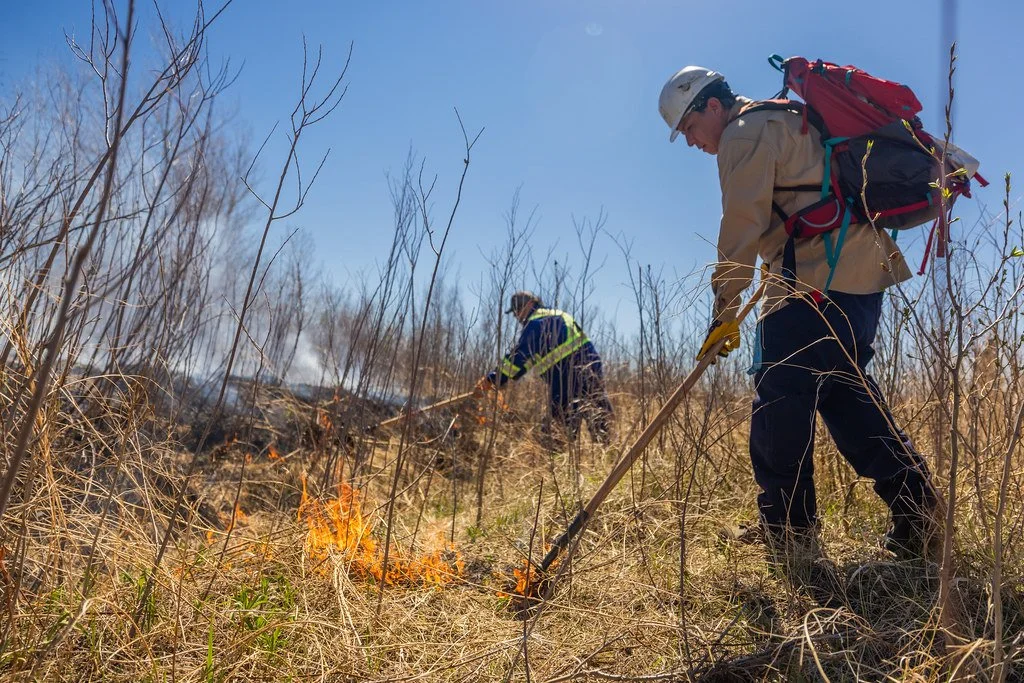
Mashteuiatsh – September 23, 2026: A new national poll finds that the vast majority of Canadians (93%) are concerned about the risk of wildfire, and they view Indigenous fire stewardship as important to addressing wildfire and improving community safety. As a result, Canadians resoundingly support (82%) federal funding for Indigenous fire stewardship, including Fire Guardians (87%).
Indigenous fire stewardship encompasses all activities Indigenous Peoples undertake related to fire that assert their sovereignty and inherent rights. It includes reducing wildfire risk, conducting cultural burns, making communities more resilient, responding to wildfires, supporting evacuations, and helping communities recover in culturally informed and locally appropriate ways.
As the survey indicates, Indigenous fire stewardship helps make all Canadian communities more resilient to wildfire. The poll, conducted by Pollara Strategic Insights for the Indigenous Leadership Initiative, surveyed 2,250 Canadians from August 21 to 31, 2026. It found:
90% support government investment in year-round work to reduce wildfire risk rather than mainly responding on a seasonal basis.
Half of Canadians (49%) had never heard of Indigenous fire stewardship, but once it was described, 84% said it is important for Canada and 83% support a larger role for it in how the country approaches wildfire
82% support federal funding for Indigenous fire stewardship, and 87% support investing in Fire Guardians who help support wildfire prevention, response, evacuation, and recovery.
76% support First Nations cultural burning and 70% favour federal investment in cultural burns.
90% agree local knowledge of the land improves wildfire response and 83% agree Canada should make full use of trained local and Indigenous crews before bringing in international ones.
Canadians view wildfire as a national issue in need of more comprehensive solutions. Nearly three out of four (73%) believe the risk to the country is greater than it was five years ago, and 58% report a direct household impact in recent years, most often smoke. While 62% rate the federal government's emergency response as good or excellent, only 40% say the same about prevention.
"What stands out isn't just how high support is, it's how broad it is," said Matt Smith, Executive Vice President West at Pollara Strategic Insights. "Once Indigenous fire stewardship was described, at least seven in ten supported federal funding for it in every region of the country and among supporters of every major federal party. Canadians see it as a practical, solutions-oriented idea with a real impact and a benefit for everyone, and that's the kind of idea people get behind.”
“Most Canadians value year-round prevention and local knowledge, and they see Indigenous fire stewardship as offering those kinds of transformative changes.” - Dr. Amy Cardinal Christianson, Indigenous Leadership Initiative
“Canadians recognize that the cycle of fighting out-of-control fires every summer isn’t working,” said Dr. Amy Cardinal Christianson, Director of Fire Stewardship for the Indigenous Leadership Initiative. “More than 2 to 1, Canadians say they rather fund year-round Fire Guardians than lease more water bombers. Most Canadians value year-round prevention and local knowledge, and they see Indigenous fire stewardship as offering those kinds of transformative changes.”
Support for cultural burning demonstrates Canadians’ openness to techniques that extend beyond emergency response. Cultural burning is an Indigenous practice of deliberately putting fire on the land for cultural and stewardship purposes, including sustaining healthy forest and reducing fuel for larger wildfires.
Cultural burning is just one example of Indigenous fire stewardship, and Canadians also value many other Indigenous-led solutions. About 9 in 10 support trained local Indigenous people taking a larger role in a range of activities, from reducing the risk of wildfires to monitoring conditions on the land and guiding outside emergency responders using local knowledge of roads, waterways, and communities.